Subscribe to
Posts
Comments

“Let us put our minds together and see what life we can make for our children.”
~Sitting Bull, Chief of the Lakota Sioux

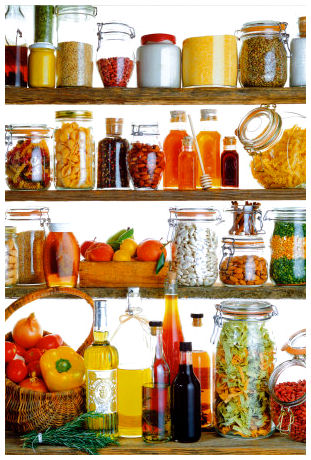
Veggie Cupboard

So many questions that I receive about vegetarianism revolve around what to actually eat. This does not surprise me. As humans we are creatures of habit, especially when it comes to eating. Having lived on a diet of meat and veg, or a diet of rice and beans or whatever we are accustomed to, we fail to realize that there are other (equally viable) ways of cooking and eating.

I get so many folks asking me, “what the heck do vegetarians eat?” And also, “what things should I have in my kitchen if I want to cook more vegetarian foods?” In response to those, sometimes cheeky and sometimes quite earnest, questions I thought I’d offer up a short series on Stocking the Vegetarian Kitchen.

For the first post, a quick glimpse into some, but by no means all, of the things that one might want to have in their vegetarian cupboard of dry goods.

You don’t need to run out and buy ALL of these ingredients the day that you decide to become vegetarian. Juts get them as you need them, for experimenting with new recipes. As you add to your cooking repertoire, you will come to know which items you should keep in stock.

    The Vegetarian Dry Cupboard

    Grains:

    Barley
    Brown Rice
    Red Rice
    Buckwheat
    Quinoa
    Amaranth
    Rolled Oats
    Whole Oats

    Pastas:

    Couscous
    Semolina
    Rice Noodles
    Buckwheat Noodles
    Penne (whole wheat)
    Elbow Pasta (Whole wheat or corn)
    Capellini Spaghetti

    Beans (Legumes):

    Red Kidney Beans
    Green Peas
    Black Beans
    Lime Beans
    Red Lentils
    Black or Brown Lentils
    Chickpeas

    Nuts & Seeds:

    Slivered Almonds
    Whole Almonds
    Flax Seeds
    Crushed Walnuts
    Peanuts (organic)
    Hemp Seeds
    Sesame Seeds
    Sunflowers Seeds
    Pecans
    Poppy Seeds
    Pine Nuts
    Cashews

    Dried Fruits & Veg:

    Dried red chilis
    Cranberries
    Raisins or Sultanas
    Golden Raisins
    Dried Apricot
    Blueberries
    Dried onion

    Canned Goods:

    Corn
    Peas
    Spaghetti Sauce
    Beans
    Pickles
    Apple Sauce
    Pineapple Chunks
    Coconut Milk
    Bamboo Slices
    Chopped Garlic

    Flours, Etc:

    Spelt Flour
    Rice Flour
    Whole Wheat Flour
    Corn Meal
    Corn Starch
    Baking Powder
    Baling Soda

    Other Ingredients:

    Regular TVP
    Beef Flavoured TVP
    Chicken Flavoured TVP

That should be enough to get you thinking about what lovely, healthy foods you can add to your collection that will shake up the dinner table a bit.

Next up…Stocking up: Spices, Flavours & Sauces for the Veggie Cook

“Forgiveness is a funny thing. It warms the heart and cools the sting.”
~William Arthur Ward, Author

Stinging Nettles

When you walk around Great Britain you may enjoy the beauty of the green fields and the wonderfully maintained public footpaths. But, if you spend enough time in the outdoors, hiking, running, biking, you may have more than one painful run-in with the wild, spiny dragon known as Stinging Nettle.

I am a hiker and, though I am also an herbalist, I still can say that I truly HATE this herb. I wish that all the Stinging Nettle in Britain would shrivel up and die. At least, that is how I feel when I am exploring the wilds (especially at night, when you can’t see the stuff.) But when I am feeling under the weather, that nettle tea begins calling my name and, after I have drunk a cup or two, I am singing its praises on high!

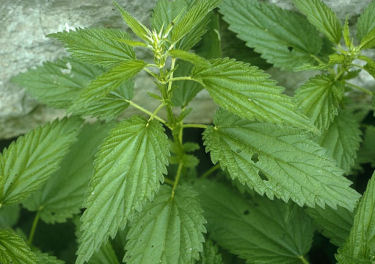
Stinging Nettle, scientifically known as Urtica Dioica, grows wild in most temperate areas of the northern hemisphere, grows on stems that can reach six feet in height, has numerous toothed leaves that grow precisely opposite each other on the stem and have visible stingy hairs on the leaf surface.

Nettle usually grows in large, spreading clumps, in untended field boundaries, abandoned lots and on roadsides.

If a leaf is even gently brushed by human skin will instantly produce a sharp, burning sting. This sensation is usually followed by redness, swelling and eventually numbness, which lasts anywhere from 15 minutes to more than an hour. This is the feature which makes nettle so unpopular with outdoorsmen.

Nettle however is quite medicinal and can also be cooked and eaten, quite safely and with numerous health benefits.

Medicinal Uses of Nettle

Nettles are extremely high in vitamins, minerals and anti-oxidants. Nettles are abundant in vital nutrients, including vitamin C, vitamin A, iron, calcium, phosphorus, magnesium and vitamin D (which is rare in plants.)

Nettle’s main functions are immune-supporting and digestive, including a reduction of inflammation, cleansing of toxins from the blood, an increase in healthy urination, anti-nausea, ease for indigestion, dilation of blood vessels, treatment for anaemia and much more. These activities combined make nettle a very powerful, yet gentle, body cleanser.

Not only does nettle remove toxins from the body, it is also used as nourishment for those with weak constitution. Nettle broth (ie. nettle tea) is often given to women and babies who have been through a rough birth or to people recovering from cancer who have problems with nausea.

Nettle can be eaten and used the same way that one would use cooked spinach leaves. It should be exposed to boiling water only for 10-30 seconds and never for more than 60, if benefits are to be retained. Ten seconds is enough to removing the stinging property form leaves. Roots are also used medicinally.

I recently had an encounter with poisonous mushrooms, while out exploring nature, having touched and held one that was highly toxic. The effects hit me within just a few minutes. As I arrived home, I felt dizzy, weak and nauseous as well as having blurry vision. But after a glass of water and two cups of nettle tea I was relieved and refreshed. Nettle is a wonderful healing agent!

Other Uses of Nettle

Even the gourmet vegetarian cook can give Nettle a try at home, just remember that, when gathering Nettle in the wild or from your local Farmer’s market, you should always wear thick gloves of either rubber or leather.

I found some great-looking recipes around the net that use Nettle. I think that the Nettle Fritters look scrumptious! But there can also be found recipes for Nettle Risotto, Nettle and Herb Dumplings, Nettle Polenta and Nettle Beer (a very traditional drink.)

An interesting, and even more unknown, fact about nettle is that it can be used to produce fabric. Nettle contains fibrous material much like another sustainable clothing fabric, hemp.

Hemp clothes are becoming more and more popular nowadays as we all grow in our awareness of the effect that human consumption has upon the Earth’s natural resources. Being frugal does not simply mean being more guarded about how you spend your own money but about how you spend the vital resources of the planet as well.

It would be interesting to see the demand for nettle increase and the demand for lycra decrease. Some students in England have recently completed a project which involved the design of clothing made from Nettle fibre and the results were quite wonderful.

There is also a German has recently revived the ancient technique for producing fine and coarse cloths from Stinging Nettle, he sells his products, which include sheets and pillowcases, on the German language website Nettle World.

If you are looking for something new to add to your plate or your frugal medicine cabinet, I think nettle should be it!

Nettle is quite an interesting plant, for all that it can provide us with. Maybe Mother Nature really did give it those stinging bits to remind us to respect it more. ;)

Eastern Zen Noodle Soup

“The more you eat, the less flavor; the less you eat, the more flavor.”
~Chinese Proverb

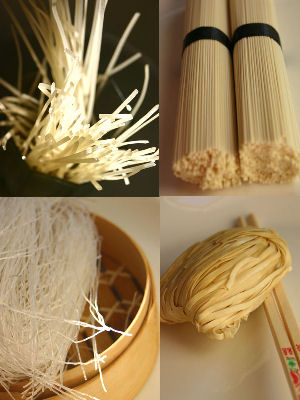
Lots of Noodles

Big hit at lunchtime today (or as the British call it: dinner.)

We have been trying to eat lighter meals that are still filled with fresh and healthy goodness.

In that spirit, and also inspired by my recent purchase of several different kinds of Asian noodles, I attempted to recreate one of those lovely noodle soups that you generally find in Chinese and Japanese restaurants. Papa seems to think the result was more Japanese in nature.

The cooking, once I had decided on all of the ingredients, was so fast that those seated at the table awaiting a meal must have wondered if the soup came out of a can.

Nope, it is all freshly assembled, I swear!

Though I haven’t eaten them in years, I can promise all of you comfort and convenience foodies out there that this noodle bowl is as good, okay let me say it: MUCH BETTER, than those packaged ramen noodles with the flavoring pouch. But just as simple and speedy!

Cook this one up to eat by itself or with some steamed dumplings. Either way it is super-easy, quick and filled with subtle flavors.

Serves Two.

    Eastern Zen Noodle Soup

    Ingredients:

    5 small Mushrooms, cut in large slices
    1/3 of a Zucchini, cut in rounds and then quartered
    1/2 of a small Onion, sliced into thin rounds and then cut in half
    7 or 8 small broccoli flowers, cut in half
    2 tbsp Sunflower Seeds
    1 tbsp Yeast Extract
    1/2 tbsp Malt Extract or Nutritional Yeast
    1/8 cup of soy sauce, or 1/4 cup if you really love it
    1 tbsp chopped Chives or Scallions
    1 clove of Garlic, chopped fine
    1 inch-long piece of Ginger, chopped fine
    1 whole Clove
    1/2 tsp Chinese 5-spice mix
    Salt & Pepper to taste
    Olive oil
    3 cups Water
    A skillet or frying pan
    A medium sauce pan

1. In a saucepan, heat the water on medium with one whole clove in it for flavor.

2. At the same time begin frying the onions, zucchini, garlic, ginger, and chives in olive oil.

3. When the water is getting warm, remove the clove then add and dissolve the yeast and malt extracts as well as the soy sauce.

4. Continue frying the vegetables, adding the mushrooms, broccoli and Chinese Five-spice mix.

5. When water is boiling test your broth for flavor, adding more soy sauce if necessary, then add your choice of Asian noodles.

6. After the noodles, add your fried vegetables etc…

7. Cook for three minutes.

8. Serve, using a fork to add equal noodles to each serving bowl, then ladling the veggie and broth mixture over them.

~

When deciding how much noodles to add it can be tricky. Use your common sense. Remember: you are making a nice watery soup, not dry noodles.

If you are wondering, Chinese 5-Spice is quite a common thing in Britain, you can buy a jar in the spice aisle of any supermarket. I have never seen it in the United States, though you may find it in a Chinese Market or you can mix some up yourself fairly easily and keep it in a jar if you do a lot of Asian-inspired cooking.

In serving the noodle soup, add just enough broth to cover the noodles. Asian noodle bowls frequently have more noodles and less broth. Though if you like it to be more even, or slightly more watery, then feel free.

These are fun with chopsticks and/or those lovely renge spoons.Posted in Asian, recipes, soups | 1 Comment »

Simple, Healthy Stir-Fry

“Please understand the reason why Chinese vegetables taste so good. It is simple. The Chinese do not cook them, they just threaten them!”
~Jeff Smith, Chef
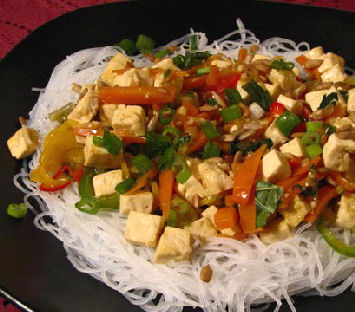
Simple Stir Fry

This post is for my cousin, who is not vegetarian, but is feeling the need to get more veggies and home-cooking into her diet while having absolutely no idea how to approach a spice rack or a Whole Foods store.

We all need to get more fresh foods into our diets, and vegetarians are no exception. Many new vegetarians especially, fall into the trap of eating just as many processed foods after going veggie as they did before hand.

Simple, changeable and quick: stir-fry is the best way to begin introducing new, fresh veggies into your diet without having to get too far out of your cooking comfort zone.

Though you can put any vegetable, any “meat,” any spices and any sauces that you want into a stir-fry (hence their versatility,) I am currently loving Asian sauces and a little marinated tofu. (Shrimp would be my suggestion for my non-veggie cousin…much healthier than beef strips.) Some supermarkets even sell packages of “stir-fry vegetables” in their produce section which usually include bell peppers, mini corn, carrot strips, bean sprouts and pea pods.

There are tons of store-bought stir-fry sauces to choose from out there. Of course, you could also make your own sauces.

Some sauce options include: ketchup-vinegar-honey, orange juice-mint paste-olive oil, peanut sauce-soy sauce, terriyaki sauce-rice syrup-water, white wine-tomato paste-honey etc, etc… The list could go one forever. If you like it, try it. I hear that blueberry jam with white wine and vinegar makes a nice sweet-n-sour stir fry sauce, I’ve gotta try that someday.

As for what to pair your stir-fry with, it is best paired with a starch of some kind. Jasmine and Basmati rices are my favorites, but noodles are a good bet too, and rather more exotic looking on the plate. Try sweet potato noodles, buckwheat noodles and any other kind of Soba or rice noodle, most of which can be found in the International Foods section at a large grocery store.

To add a bit of fun to a stir-fry you can try learning to use chopsticks. Papa is a big believer in them, but Mama was a not-so-willing convert at first. They are not THAT difficult to master and once you do, they provide the benefit of helping you to eat just that little bit slower. This is great for both your digestive system and the width of your waistline. Plus you just look cooler when you go out for Thai or Chinese food! ;)

I like a jam-packed stir-fry, using all of the ingredients listed below. But if you like it less busy, simply by selecting four or five veggies and one or two extras from the following ingredients, you can get a taste of what our typical dinner-time stir-fry is currently looking like:

    Simple, Healthy Stir-Fry

    Veggies:

    half a red bell pepper
    1/3 of a medium zucchini, cubed
    1 large red onion, cut in rounds
    5-6 medium mushrooms (any variety) – sliced
    half a large carrot, sliced in thin strips
    handful of chopped cauliflower
    handful of chopped broccoli
    freshly peeled whole peas or whole peapods

    Extras:

    tofu (firm, marinated, cubed)
    chives or green onions
    ginger root, sliced tiny
    garlic clove, sliced tiny
    almond slivers
    pineapple chunks
    salt & pepper

    Sauce:

    soy sauce
    sweet chili sauce
    olive oil

Preparing the Tofu:

1. Take the brick of tofu, cut it in half (if you use more than half it will be too much) and then cut it in strips about 1/4 – 1/2 wide. Proceed by cutting these strips into smaller chunks or cubes.

2. With a little olive oil, fry these cubes in a skillet on medium heat until they get just a little bit brown on the edges. This helps to keep them firm when adding them to the stir fry later.

3. Place the cubes in a dish or bowl, cover with the sauce mixture, in this case sweet chili sauce and soy sauce (see below,) and marinate for 1-2 hours or longer if desired.

Making the Stir-fry

1. Begin cooking your starch in a pot. For non-vegetarian readers, also begin by frying any meat that you are adding to the stir-fry.

2. Once there is only five or ten minutes left until your chosen starch (rice, couscous, noodles etc.) is finished cooking, you can begin by heating olive oil in a pan. I use a lot, maybe 5 tbspn.

3. Add the hardest, or densest veggies first…ie. the zucchini and the carrot strips. These will take the longest to cook. Do NOT cook them until softened, as stir-fry is meant to result in medium-cooked veggies, not well-done.

4. Once the first veggies start to soften, or change color, it is okay to add the rest of the veggies, extras, spices and herbs, if any. Hold off on adding the sauce and tofu until later.

5. Stir-fry on medium-high heat until you feel that the veggies have reached a level of cooked that you desire.

6. Add the sauce mixture and stir. Also add the tofu and continue frying on low heat for an additional 2-3 minutes until tofu is warm.

7. Serve the stir-fry with your starch and a nice wine. Bon Appetit!

~

Though stir-fry is essentially easy, getting veggies the right consistency, in other words NOT over-cooking them can, take a while to master.

Real Asian stir-fry is cooked at very high temperatures, generally in a wok, which allows them to achieve a “flash fry” of the veggies.

You can get the same effect at home in a regular skillet, but it will take a few tries to master the timing and temperature.

Your stir-fry will still be just as tasty even if the level of cooking is a bit off. Enjoy yourself and experiment!
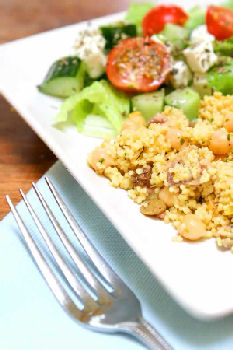
Curried Mushroom Couscous

Mushroom Couscous

One of my last bastions of “instant” food was rice and couscous. I couldn’t imagine myself EVER being able to make one that tasted as good as the Near East brand does.

Papa thought this was silly, as couscous is meant to be dead simple. But Mama was holding onto her 1980’s instant food upbringing as the last straw of her (SAD) Standard American Diet.

Having been living in the UK now for over four months, I have finally relinquished the nostalgic hold that the SAD had on my tummy and gone forward to create my own version of my favorite flavour (Wild Mushroom and Herb) of Near East Couscous. (Which can also be made with quinoa, if you wash and pan fry it for a minute before use.)

I am absolutely astonished at how close it tastes to the one that I used to buy. And once you figure out, by weight, how much cheaper it is. Well, let’s just say that I am embarrassed at how long it took me to try making this myself. ;)

Nevertheless, we now love it so much that we’ve eaten it three times in the last week and a half.

We’ve been doing a bunch of field and trail walking and, using an old sunflower margarine container, this stuff is très portable!

Enjoy it on your own open-air picnic today!

    Curried Mushroom Couscous

    Ingredients:
    3/4 cup of couscous
    1 1/2 cup water
    2 clove garlic, chopped fine
    1/2 small green bell pepper, diced tiny
    4 large mushroom, chopped very small
    1 scallion (or green onion) cut into small pieces
    1/4 tsp cumin
    1/2 tsp onion salt
    1/4 tsp black pepper
    1 tbsp sea salt
    1 tsp curry powder

1. Bring water to a boil.

2. On a separate burner heat olive oil in a frying pan.

3. Fry plain couscous for 2-3 minutes until all couscous is covered in oil. *This step is important and is the secret to getting your couscous to turn out like the “instant” kind.

4. Add couscous and all other ingredients to the boiling water.

5. Stir well and cook on low temperature for 3-5 minutes or until all water is absorbed.

6. Serve with salad, sandwiches or tacos.

“When you dance, your purpose is not to get to a certain place on the floor. It’s to enjoy each step along the way.”
~Wayne Dyer

« Prev - Next »